
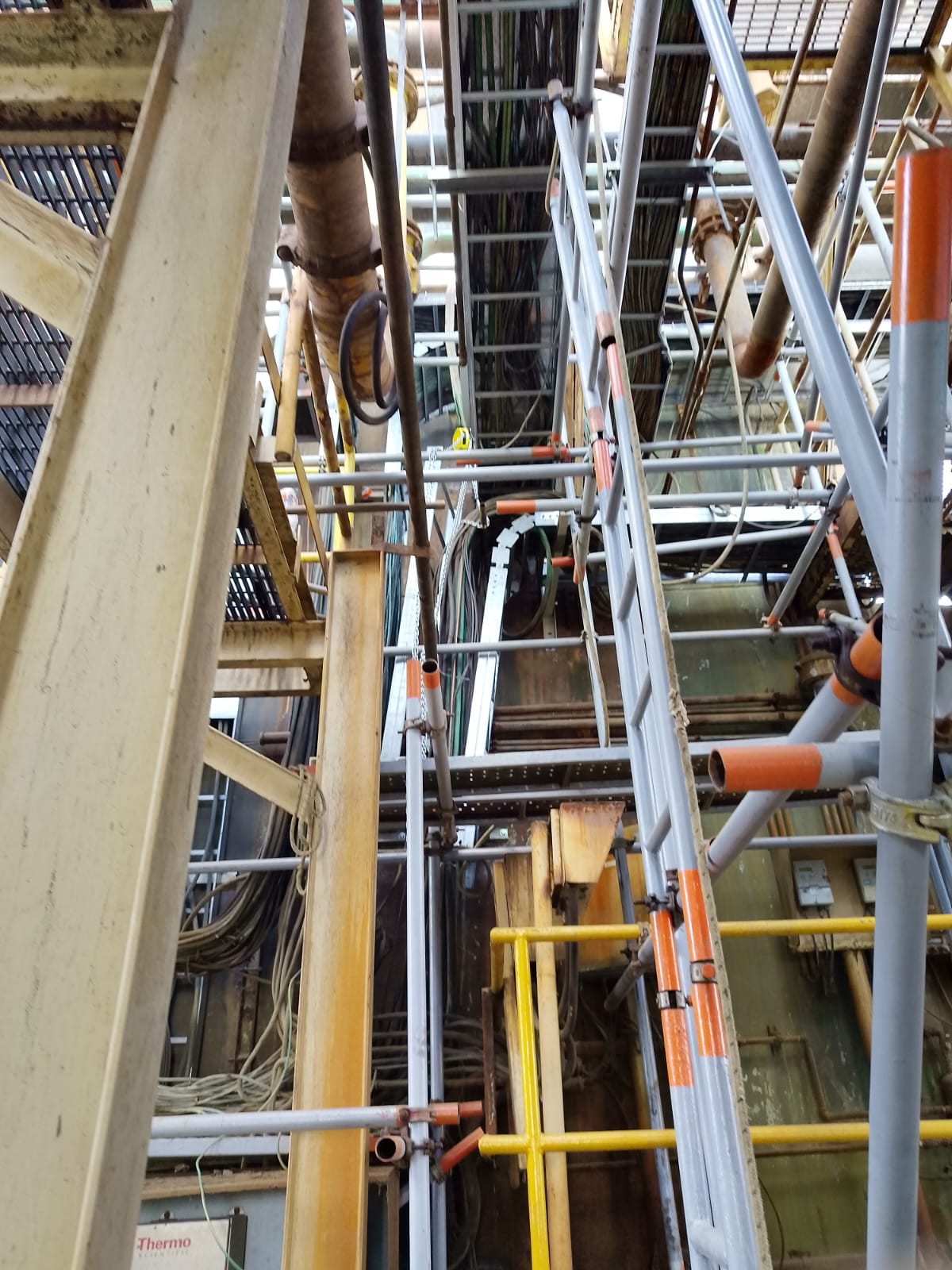
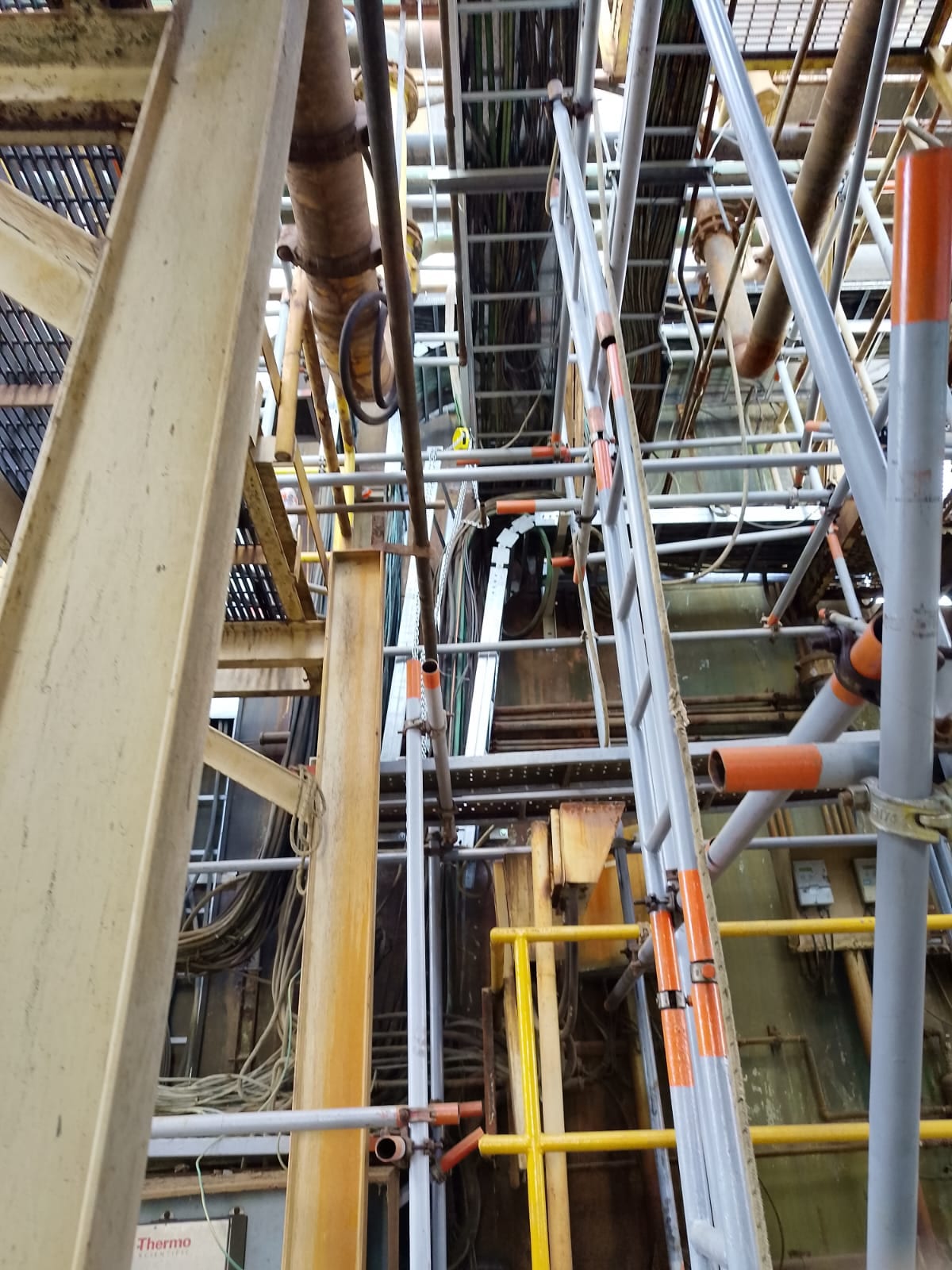
The industrial electrical conduit It is part of the infrastructure that allows the conductors to be protected, organized and maintained throughout the entire installation. Its design and assembly must take into account the characteristics of the production process, the environmental conditions, the equipment involved and the current and future needs of the plant.
A correctly executed pipeline facilitates maintenance, improves the organization of the lines and contributes to reducing risks during the operation of the installation.
What is an industrial electrical conduit?
The system used to conduct, support and protect electrical conductors is called channeling.
In industrial environments it can be made up of cable trays, ladders, pipes, tubes, channels, accessories and support systems, among other solutions.
The choice does not depend only on the number of cables. Factors such as circuit voltage, environmental conditions, mechanical stress, temperature, the possibility of corrosion, the type of industrial process and maintenance requirements must also be analyzed.
Therefore, An industrial pipeline must be thought of as part of the electrical design of the installation .
Why is cable routing important in industries?
Industrial facilities usually bring together a large number of circuits in spaces where there are also machines, structures, pipes, production systems and personnel circulation.
In this context, a disorganized or insufficiently protected line can make maintenance tasks difficult and increase drivers' exposure to damage.
A correctly designed pipeline allows:
- protect cables against certain mechanical stresses;
- maintain orderly routes;
- facilitate circuit identification;
- improve access for inspection and maintenance;
- organize different types of laying;
- foresee future expansions;
- make better use of available spaces;
- reduce subsequent interventions on the installation.
Channeling, therefore, is not only a matter of visual order. It is a functional part of the electrical installation.
Benefits of a properly designed pipeline
Driver protection
Cables may be exposed to shocks, vibrations, friction, humidity, dust, high temperatures and other factors typical of each industrial environment.
The channeling system must be selected in accordance with these conditions to provide the corresponding protection in each case.
Easier maintenance
Cable routing in industries allows circuits to be located and accessed more easily.
This is especially important in plants where an electrical intervention may require coordinating work with production, mechanical maintenance, security and other areas.
The clearer the distribution is, the easier it is to intervene on it.
Power, control and instrumentation organization
Power, control, instrumentation, communications and other systems cables can coexist in a plant.
Planning the routes allows you to establish an adequate distribution and consider the necessary separations to avoid operating problems and interference.
Greater ability to adapt
Industrial facilities change.
Machines are incorporated, processes are modified, sensors are added, production lines are expanded or equipment is replaced.
A pipeline that considers available capacity and future routes can facilitate these modifications and avoid unnecessarily complex work.
Better use of infrastructure
The design of the routes allows you to take advantage of available spaces and previously define support points, intersections and accesses.
This is particularly relevant in existing facilities, where the available space is usually limited by other structures and services.
What should be taken into account when designing an industrial pipeline?
There is no single pipeline system suitable for all industries.
Before defining a solution, it is necessary to analyze the particular characteristics of the project.
Circuit type
A power cable does not require the same treatment as one intended for instrumentation, control or communications.
The nature of the circuits must be considered from the route planning stage.
Quantity and characteristics of cables
The diameter, weight, quantity and arrangement of the conductors directly influence the selection and sizing of the pipeline.
The thermal conditions associated with the concentration of cables must also be considered.
Environmental conditions
The presence of moisture, dust, chemicals, corrosive agents, high temperatures or exposure to the elements can completely modify the appropriate solution.
mechanical stress
In an industrial plant there may be traffic of vehicles, machinery, vibrations, accidental impacts and other factors that must be considered when defining the protection and support of the lines.
Support system
It is not enough to select a tray or a pipe.
It is also necessary to determine how it will be supported, where the supports will be located and what loads it will have to support.
A correctly installed pipeline requires a support structure in accordance with the conditions of the project.
Maintenance and expansions
The route must allow inspections and subsequent work to be carried out without turning each intervention into a work.
It is also advisable to consider from the beginning the possibility of incorporating new circuits.
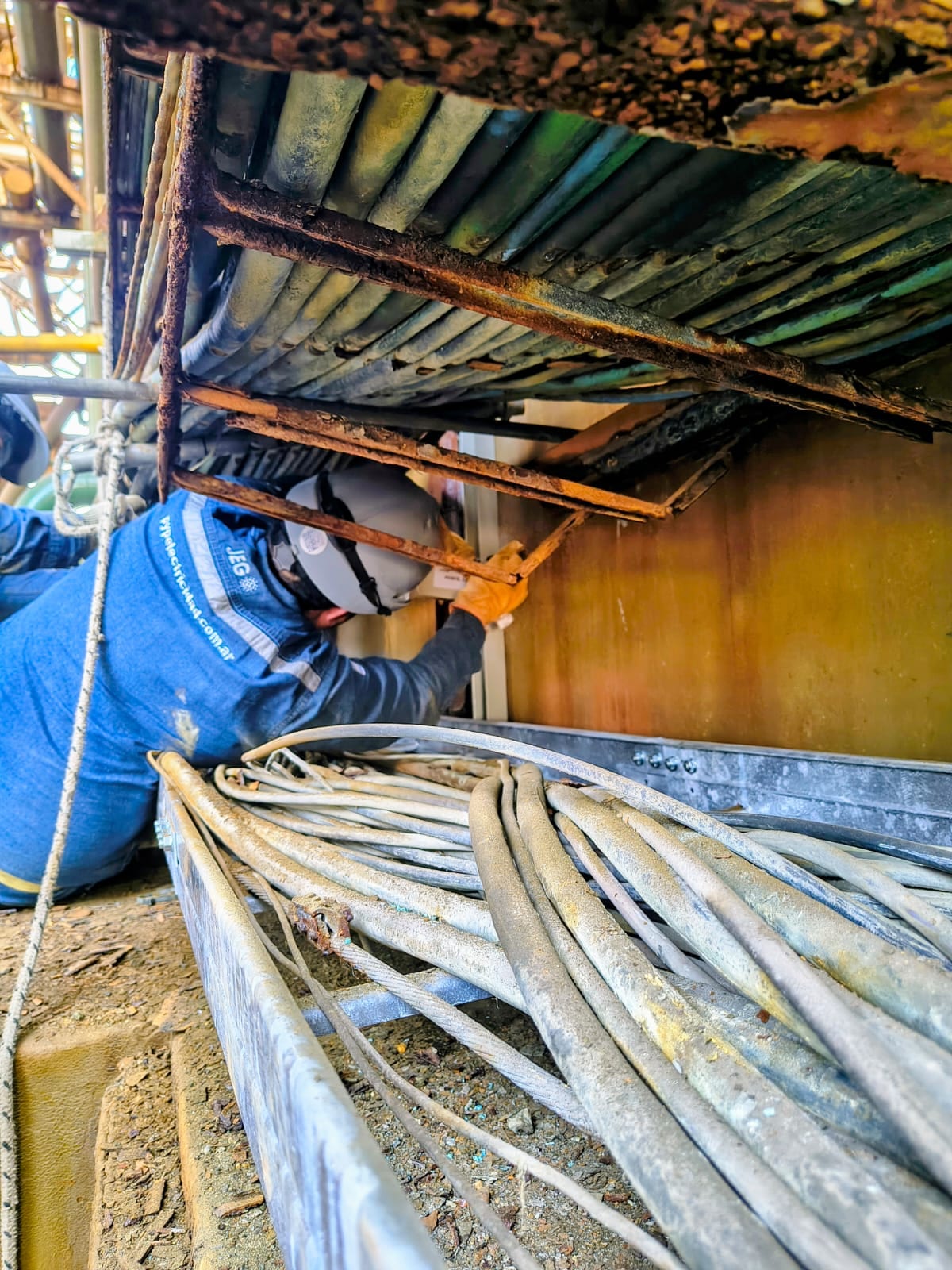
Types of piping used in industrial facilities
The solution depends on the characteristics of each project. Among the most frequently used systems are:
Cable trays
The trays allow large quantities of cables to be distributed through organized and accessible routes.
There are different configurations, including perforated trays and ladder trays.
They are common in industrial plants because they allow extensive cables to be organized and facilitate certain inspection, maintenance and expansion tasks.
Its selection must consider, among other factors, the cable load, materials, environmental conditions and the support system.
Cable ladders
Ladders use stringers and crossbars to support the cables.
Its configuration allows good accessibility and is appropriate for certain power and industrial distribution lines.
Pipes and tubes
Tubes and pipes can provide physical protection to conductors and allow routes where a more closed system is required.
Metallic or non-metallic, rigid or flexible solutions can be used, depending on the characteristics of the installation.
Channels and closed pipelines
Closed systems allow conductors to be contained and provide additional protection against certain external conditions.
The choice depends on the environment, the circuits involved and the construction characteristics of the installation.
Channeling in special industrial environments
Some facilities present conditions that require a particular analysis.
In sectors with the presence of corrosive substances, combustible dust, flammable gases or vapors, for example, the selection of materials and piping systems must be made taking into account the specific conditions of the area.
Classified areas
In installations where an explosive atmosphere may exist, it is not enough to select a conventional tray or pipe.
The classification of the area and the particular conditions of the installation must first be determined.
The regulations AEA IEC 60079-10-1 and AEA IEC 60079-10-2 , in their current editions, respectively contemplate the classification of areas where explosive atmospheres may exist due to gases, vapors or mists, and due to combustible dust.
In these cases, the channeling must be part of a comprehensive solution compatible with the equipment, accessories, enclosures and protection systems used.
Regulations applicable in Argentina
The regulations related to industrial electrical installations are not reduced to a single standard.
The applicable regulations depend on the characteristics of the project, the level of tension, the type of establishment, the environment and the activity carried out.
Among the references that should be considered are:
Law 19,587 on Hygiene and Safety at Work
Establishes the general hygiene and safety framework applicable to work establishments in Argentina.
Decree 351/79
It regulates Law 19,587 and its Annex VI contains the Chapter 14 – Electrical Installations .
There are requirements related to electrical installations, conductors, conduits, grounding and protection against direct and indirect contacts, among other aspects.
The Decree also establishes the need to consider the corresponding regulations of the Argentine Electrotechnical Association and that the materials and equipment used respond to applicable national or international standards.
AEA Regulations
The regulations of the Argentine Electrotechnical Association (AEA) They constitute a fundamental technical reference for the design and execution of electrical installations.
Within them is the family AEA 90364 , corresponding to low voltage electrical installations.
However, it should not be interpreted that there is a single regulation applicable to any industrial pipeline. The corresponding standard or normative part must be determined according to the characteristics of each installation.
IRAM and IEC standards
The standards corresponding to the products and systems used must also be considered.
The family IRAM 62386 , for example, contemplates tube and accessory systems for low-voltage electrical installations.
For cable tray and ladder systems, IEC 61537 constitutes a specific international reference for these systems.
In areas with risk of explosion, family rules are also relevant. IEC 60079 , adopted in Argentina through the corresponding regulations and technical standards.
A fundamental consideration: industrial activity
The applicable regulations may also vary depending on the activity.
For example, facilities linked to certain mining activities are covered by specific regulations. In these cases, it is necessary to analyze the regulatory regime corresponding to the establishment before defining the design and execution criteria.
Therefore, Regulatory compliance must be evaluated for each project and not through a generic list of standards applied indiscriminately .
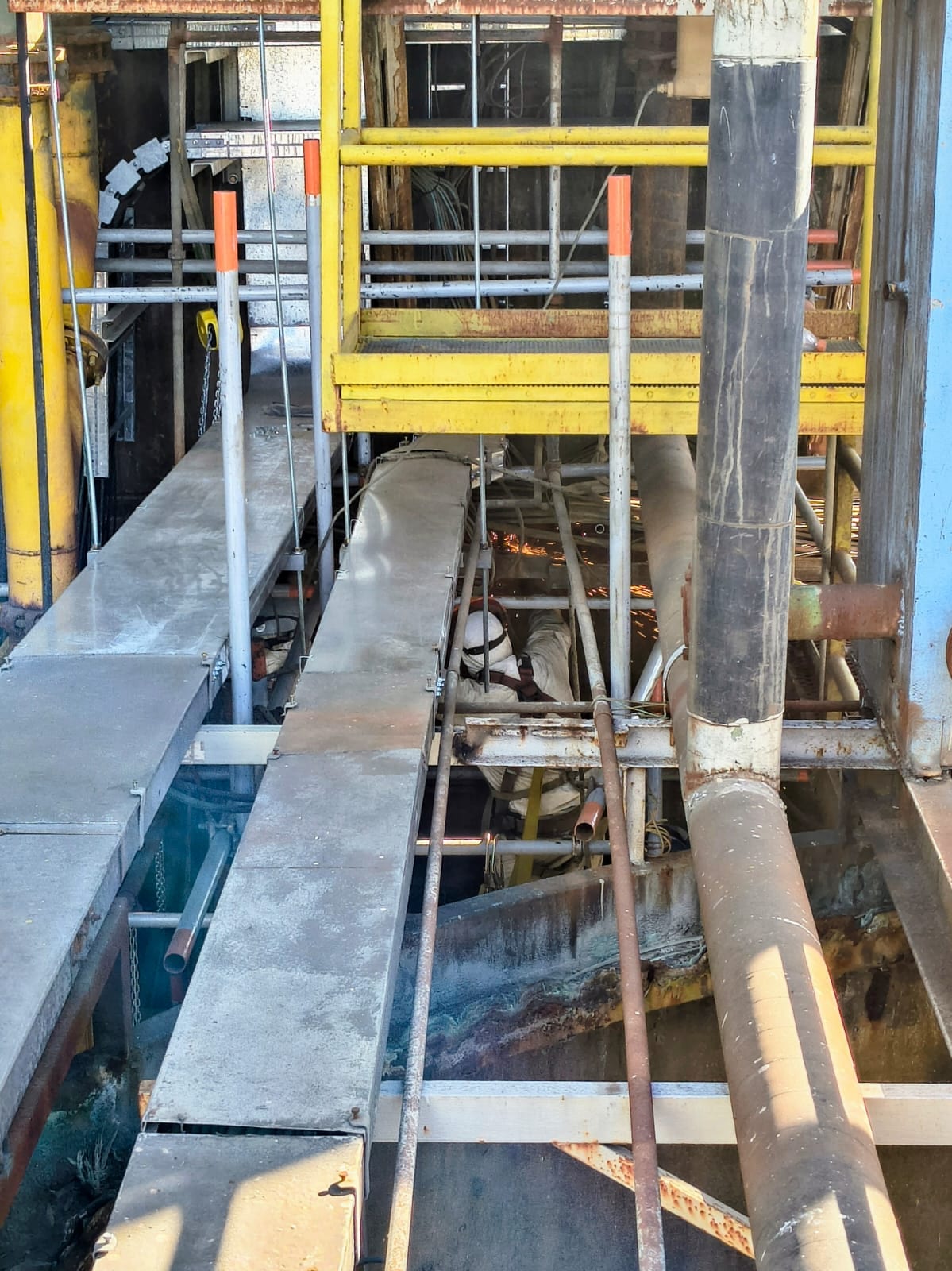
Why hire PyP Electricidad?
Industrial trunking is not simply about installing a tray and placing cables inside.
It requires analyzing the route, the equipment involved, the environmental conditions, the support systems, the distribution of the circuits and the maintenance and expansion needs.
At PyP Electricidad we integrate channeling and laying work within a broader vision of the industrial electrical installation.
Our experience includes electromechanical works, panel integration, automation and maintenance , which allows the cables to be addressed taking into account their relationship with the rest of the installation.
Among the jobs we can carry out are:
- planning and execution of routes;
- installation of cable trays and ladders;
- mounting of support systems;
- installation of pipes and conduits;
- laying and organization of conductors;
- integration with electrical panels;
- identification and organization of circuits;
- intervention on existing facilities;
- Work associated with plant expansions and modifications.
Furthermore, PyP Electricidad works under a management system that includes ISO 9001, ISO 14001 and ISO 45001 , integrating quality criteria, environmental management and occupational health and safety.
A well-made pipeline starts before the first cable
In an industrial plant, a tray, a ladder or a pipe may seem secondary elements compared to a panel, a motor or a production line.
But they are part of the infrastructure that allows all these devices to be connected.
A good pipeline must respond to the present of the installation, but also consider its maintenance, its operating conditions and the modifications that may arise over time.
Therefore, Cable routing is also part of the electrical engineering of an industrial plant .
Do you need to make an industrial electrical conduit?
At PyP Electricidad we can evaluate the characteristics of your installation and develop a channeling, supports and laying solution in accordance with the needs of the project.
Contact us to analyze your work or industrial installation.
PyP Electricidad — We connect energy and quality.